
Shared Ideas
Teachers and Discernment: Learning Without Surrendering Common Sense
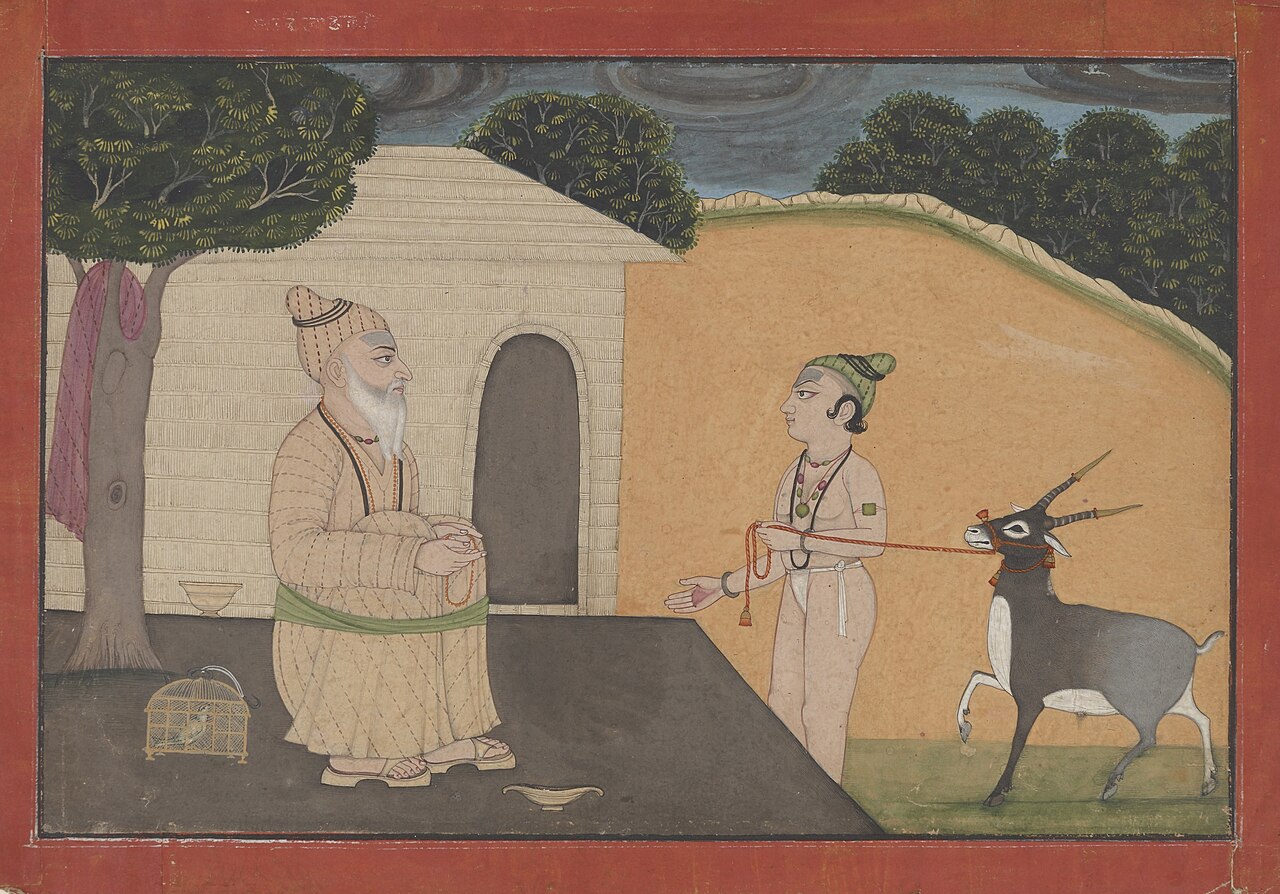
The guru of the Upanishads, the Buddha's 'admirable friend,' and the Sikh decision to end human guruship, what four traditions teach about trusting a teacher, and the concrete warning signs of control.
Why teachers matter
Scripture alone rarely replaces a living example. Hindu, Buddhist, Jain, and Sikh paths all speak of teachers, Gurus, and admirable friends who clarify practice, and gratitude toward teachers is a classical virtue in every one of them. But the traditions are not naive about authority, each has also built in checks, tests, and in one striking case a permanent structural solution to the problem of teachers who go wrong. This article looks at both halves: why the role is honored, and how students keep their judgment.
Sitting near: the guru in the Upanishads
The oldest sustained portrait of the teacher-student bond in Indian literature is in the Upanishads. The popular etymology of upanishad, sitting down near a teacher, captures how the texts present themselves, though scholars such as Patrick Olivelle argue the word originally meant something more like “hidden connection.” Either way, the texts stage their deepest teachings as conversations: Uddalaka patiently walking his son Shvetaketu through salt dissolved in water in the Chandogya Upanishad; young Nachiketa pressing Death himself for answers in the Katha.
The Mundaka Upanishad (1.2.12) gives the classic instruction: a seeker should go, fuel in hand for the teacher’s fire, to a guru who is shrotriya, learned in the scriptures, and brahmanishtha, established in the reality he teaches. Both qualifications matter. Learning without realization produces a lecturer; charisma without learning produces a hazard.
From this seed grew the guru-shishya parampara, the teacher-student lineage through which Hindu traditions transmit not just texts but pronunciation, method, and lived example across generations. And note what the Bhagavad Gita (4.34) says the student brings: humble approach (pranipata), service (seva), and pariprasna, questioning. Interrogation is not a modern imposition on the tradition; it is written into the job description of the student. The Upanishadic dialogues themselves are largely records of students asking hard questions and teachers taking them seriously. (New to these texts? Start with our beginner’s orientation to the Upanishads.)
The admirable friend: Buddhist checks on authority
The Buddha’s preferred term for the teacher’s role is disarmingly modest: kalyanamitra (Pali kalyanamitta), the “admirable friend.” When Ananda suggests that such friendship is half of the holy life, the Buddha corrects him, it is the whole of it (SN 45.2), because a person with admirable friends develops the entire path. A friend, note: not an intermediary, not a gatekeeper of grace.
Two other discourses complete the picture. In the Vimamsaka Sutta (MN 47), the Buddha tells monks that an inquiring student should investigate the Teacher himself, observing over time whether any defiled states can be found in his conduct, before settling conviction. He invites scrutiny of his own person as the proper basis for faith. And in the famous advice to the Kalamas (AN 3.65), he lists ten insufficient grounds for belief, including “the teacher said so” and “it is our tradition”, directing inquirers instead to test teachings against experience and the counsel of the wise. Buddhism honors teachers immensely, especially in Vajrayana lineages, but the canonical baseline is clear: confidence is meant to be earned by observable conduct, not commanded.
The Sikh resolution: a scripture as final Guru
Sikhi ran the experiment of living human Guruship for ten generations, from Guru Nanak (1469–1539) to Guru Gobind Singh, and then deliberately ended it. In October 1708 at Nanded, shortly before his death, Guru Gobind Singh declined to name a human successor. Instead he bowed before the Adi Granth, the scripture compiled by his predecessors, and conferred Guruship on it permanently: Sabh Sikhan ko hukam hai, Guru Maneyo Granth all Sikhs are commanded to accept the Granth as Guru.
Whatever else this decision accomplished, it is a structural answer to the problem this article is about. No living person can now claim the Guru’s seat in Sikhi; movements that have tried are regarded as outside the mainstream. Reverence flows to a text whose contents cannot be quietly revised to suit a leader’s convenience, read aloud in an institution, the sangat, where interpretation happens in public. Sikhs still learn from granthis, gianis, and respected elders, but the final teaching authority sits open on the palki for anyone to read. See our guide to the Guru Granth Sahib and Guru Nanak’s core message for more.
Warning signs, in plain terms
Across traditions and centuries, unhealthy teacher dynamics look remarkably alike. Concrete patterns that should raise alarm, singly and especially in combination:
- Isolation. Students are discouraged from keeping outside friendships, family ties, or independent counsel. Healthy teachers send you back to your life; unhealthy ones become your whole life.
- Financial opacity. Escalating donations, pressure framed as spiritual opportunity, no visible accounting. Money in mature institutions is boring and auditable.
- Punished questions. Doubt is treated as spiritual failure or disloyalty rather than as the pariprasna the Gita expects of students.
- The exemption claim. The teacher is said to be “beyond ordinary ethics,” so behavior that would disgrace anyone else is reframed as crazy wisdom or a test. No classical tradition actually grants this exemption; the Vimamsaka Sutta’s whole premise is that a genuine teacher’s conduct bears inspection.
- Sexualized “teaching.” Sexual contact framed as initiation, blessing, or advanced practice is exploitation in every tradition’s own terms.
- Fear at the exit. Threats, of curses, ruin, spiritual catastrophe, or exposure of confidences, aimed at those who consider leaving. The ability to walk away freely is a minimal test of any legitimate community.
The positive signs mirror these: a teacher whose life roughly matches the teaching, who has peers and accepts correction, whose finances bear daylight, whose long-term students become more capable and independent rather than more dependent, and who leaves room for your medical care, family duties, and outside relationships.
Holding devotion and discernment together
It is tempting to conclude that the safe course is having no teachers at all. The traditions do not draw that conclusion, and for good reason: self-taught practitioners reliably develop blind spots that a community and an experienced guide would catch early, a theme we explore in why community matters. The classical position is more demanding than either credulity or cynicism: honor teachers, serve generously, and keep your judgment awake, because real teachers are not threatened by it. Charisma travels fast online; slow trust is safer. Verify lineages where relevant, talk with long-term students, including ones who left, and remember that in every tradition surveyed here, the teacher’s function is to make themselves progressively unnecessary.