
Festivals
Guru Nanak Gurpurab: Celebrating the First Guru's Birth
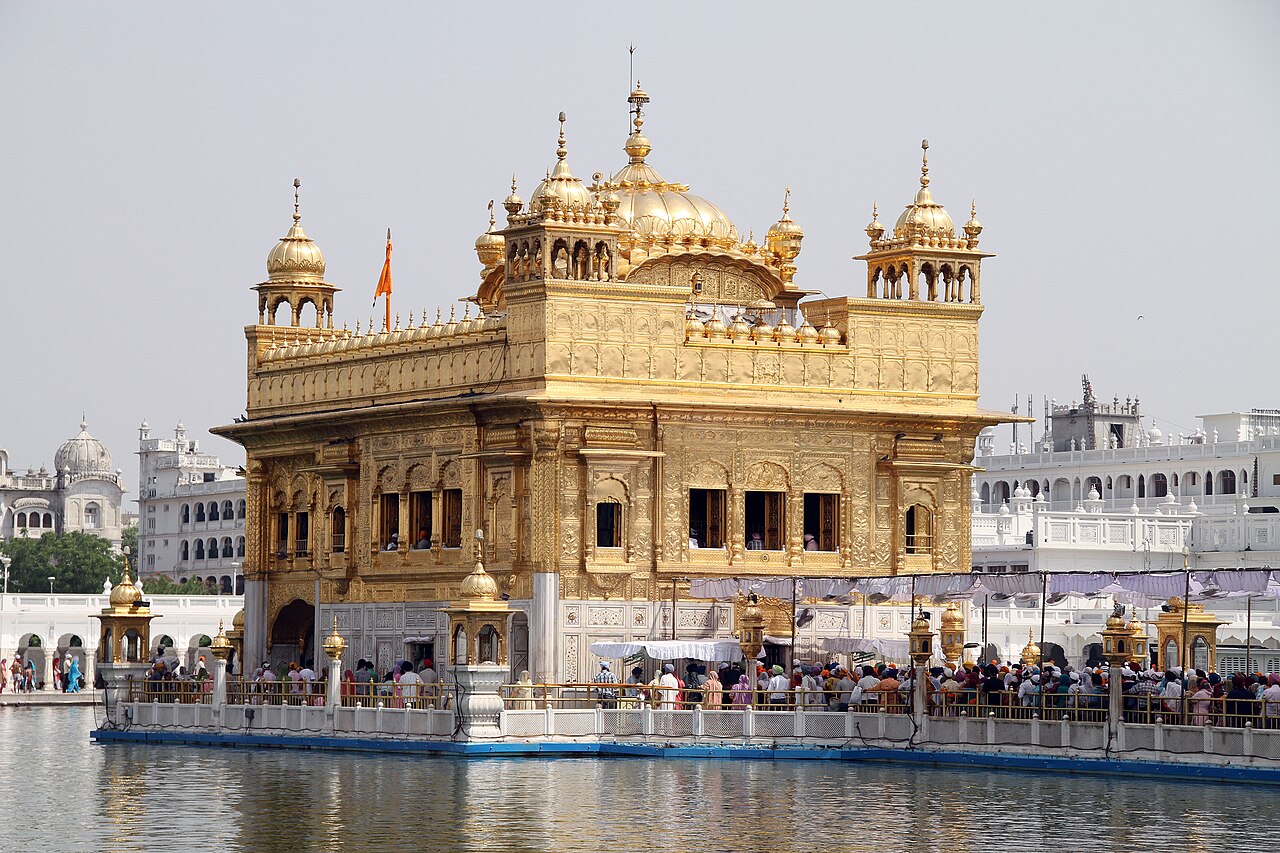
How Sikhs mark Guru Nanak's birthday with Akhand Path, Nagar Kirtan processions, and langar, what Kartik Purnima means on the calendar, and how the festival reads in gurdwaras worldwide.
A birthday that fills the calendar
Gurpurab means “the Guru’s day,” and among Sikh festivals none is more widely observed than the birth anniversary of Guru Nanak (1469–1539), the founder of the tradition. In Punjabi homes and gurdwaras from Amritsar to Birmingham, the day opens before dawn with scripture, song, and the smell of karah prasad. Streets fill with processions. Kitchens run through the night. For one lunar date each year, the community turns outward: not only remembering a historical teacher but rehearsing the equality, devotion, and service his life modeled.
If you have read our introduction to Guru Nanak’s message, you already know the themes: one Creator, honest work, rejection of empty ritual, dignity across caste lines. Gurpurab is where those themes become public celebration.
When the festival falls
Most of the world marks Guru Nanak’s birthday on Kartik Purnima, the full moon of the lunar month Kartik (October–November). The Nanakshahi calendar, adopted by the SGPC in 2003, fixes the date in the Gregorian calendar for planning purposes, but many communities still follow the traditional full-moon reckoning. Scholars note that historical sources disagree on the actual birth month; some traditions prefer April (Vaisakh). What stays constant is not the astronomical dispute but the rhythm: a night-and-day observance clustered around the chosen date.
Kartik Purnima is busy on other calendars too. Hindus observe Dev Deepawali and bathe at sacred rivers; Jains mark a season of pilgrimage. Sikhs do not share those rites, but the shared autumn full moon explains why cities feel crowded with festival traffic on the same weekend.
Akhand Path: scripture without pause
The heart of Gurpurab preparation is the Akhand Path, the unbroken reading of the entire Guru Granth Sahib. Volunteers read in shifts so that no gap opens between the first word of the scripture and the last. A full reading takes roughly forty-eight hours. Larger gurdwaras begin the Akhand Path two or three days before the birthday; smaller ones may sponsor one reading that ends on the festival morning.
The practice treats the Guru Granth Sahib not as a book to study in excerpts but as a living sovereign whose word should flow continuously. Readers sit on a low stool facing the raised platform where the scripture rests under a canopy. The congregation may come and go, but the reading itself does not stop for meals or sleep. When the final pages are reached, the community gathers for bhog, the concluding prayer and distribution of karah prasad, the sweet semolina offering.
If you visit during an Akhand Path, enter quietly, cover your head, and sit on the floor without interrupting the reader. Photography of the scripture platform is discouraged in many gurdwaras; ask an usher if unsure.
Nagar Kirtan: the city sings
On the birthday, or the nearest Sunday for diaspora scheduling, gurdwaras organize Nagar Kirtan, a street procession whose name means “town kirtan.” The Guru Granth Sahib travels on a decorated float or palanquin under a canopy. Five initiated Sikhs, often dressed in saffron, walk ahead carrying swords in a reminder of the Khalsa. Musicians sing hymns; volunteers hand out water and snacks; martial arts teams (gatka) perform for the crowd.
The procession is both worship and outreach. Passersby hear the Name sung in public. Non-Sikhs are welcome to watch, though invited to dress modestly and remove shoes if they step onto ground treated as sacred near the scripture float. In cities with large Sikh populations, Nagar Kirtan can stretch for miles and require police coordination. In smaller towns it may be a single neighborhood loop. The scale changes; the logic does not.
Children often receive their first visible role carrying flags (nishan sahib colors) or serving langar from mobile kitchens towed behind the float. The festival teaches by participation: you learn the hymns by walking beside them.
Langar and the open door
No Gurpurab is complete without langar, the free community meal. On ordinary weeks, langar already expresses Sikh equality: everyone sits on the floor, no one pays, caste and rank left at the door. On the birthday the kitchens multiply. At the Golden Temple in Amritsar, already the largest free kitchen on earth, crowds surge for kada prasad and dal-roti served around the clock. Diaspora gurdwaras rent extra hall space, call volunteers from neighboring cities, and cook in shifts from midnight to midnight.
Our guide to langar explains the theology: food as shared sovereignty, labor as worship. Gurpurab puts that theology at maximum volume. If you attend, expect to eat sitting cross-legged on mats, to accept what is served without demanding special plates, and to help stack dishes afterward if asked. Refusing langar after accepting an invitation to the hall can be read as discourtesy; a small portion eaten with thanks is enough.
Night vigil and kirtan
Many communities hold an overnight kirtan program ending at the historical birth hour, often said to be before dawn. Hymns of Guru Nanak from the Japji Sahib and Asa di Var alternate with lectures on his travels (udasis) and his settlement at Kartarpur. The tone mixes joy and sobriety: birthday cake appears in children’s programs; elders weep during verses about divine Name and human pride.
At Nankana Sahib in Pakistan, the birthplace shrine draws pilgrims from both sides of the border when permits allow. In India, the Golden Temple illuminates its marble and gold; reflection pools mirror lamps. Diaspora gurdwaras replay the same emotional arc on a smaller budget: projector slides of Punjab, English translations on screens, youth recitations of Mul Mantar.
For visitors and neighbors
You do not need to be Sikh to attend Gurpurab events. You do need the basics of gurdwara etiquette: head covering, shoe removal, no tobacco or alcohol on the premises, modest dress. Stand when the congregation stands for Ardas, the community prayer. Bow toward the scripture if others bow, or stand respectfully if you prefer not to.
Do not treat the Nagar Kirtan as a parade for casual photography of strangers without consent. Do accept langar if you are comfortable eating vegetarian food (gurdwaras serve lacto-vegetarian meals without egg or meat). Ask questions after the service, not during scripture reading.
Why the birthday still matters
Guru Nanak did not found an empire or a closed sect. He sang, traveled, farmed, and argued with priests and rulers alike. His successors compiled his hymns and their own into the scripture Sikhs now crown each morning. Gurpurab is the yearly reminder that the tradition begins in a voice, not in a bureaucracy: Ik Onkar, one reality; honest work; shared meal.
Other festivals in this library mark different paths: Diwali for Hindus and Jains, Vesak for Buddhists. Gurpurab belongs in that constellation as the Sikh entry: scripture continuous, song in the street, no one turned away from the kitchen. If you hear the drums and the harmonium one autumn morning, follow the procession to the door. The meal is already cooking.