
Buddhism
Who Was the Buddha? The Life Behind the Teaching
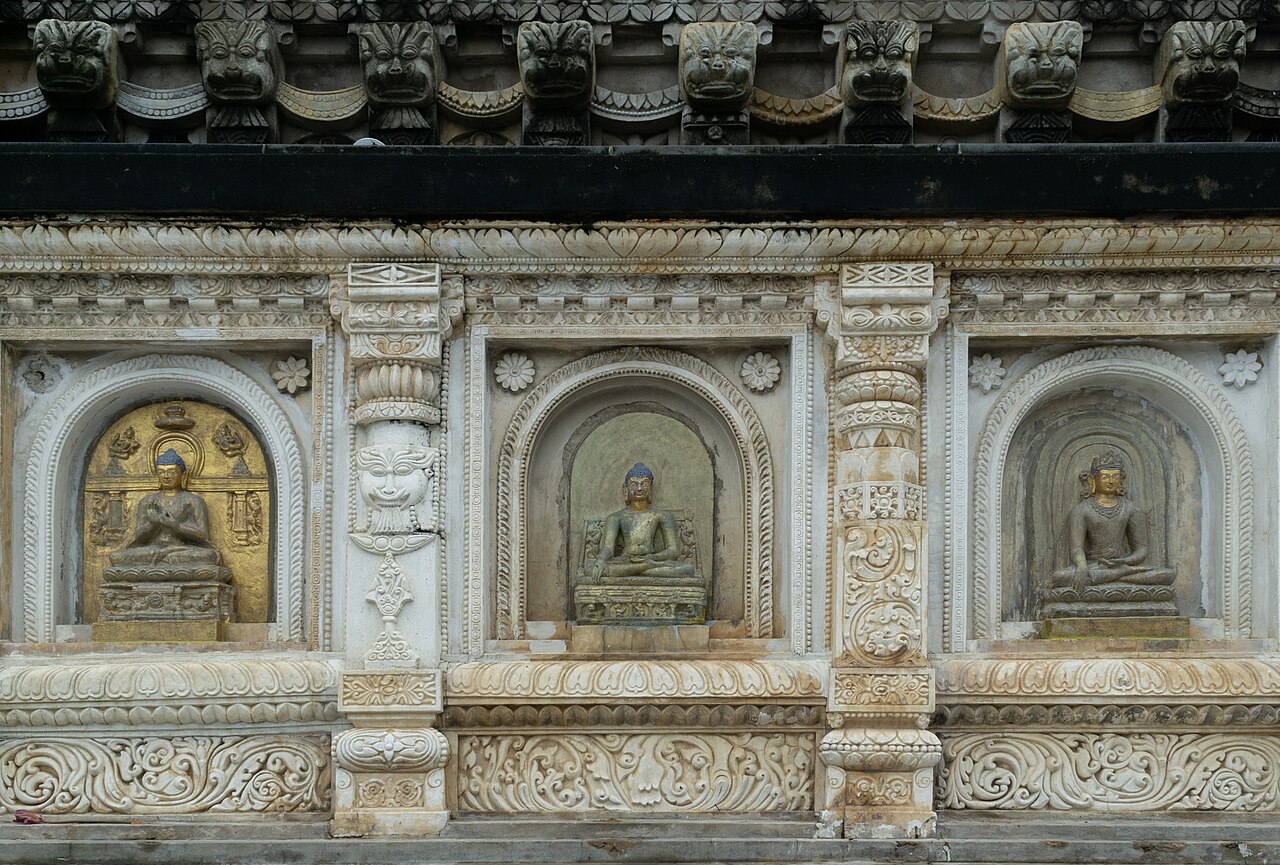
From Prince Siddhartha's birth at Lumbini through his awakening at Bodh Gaya and first teaching at Sarnath, the biographical arc the Pali canon preserves, and what historians can and cannot verify.
Before “Buddha” became a world religion’s name, it was a job description. Buddha means “awakened one,” and the man who earned it was born Siddhartha Gautama, a clan prince in what is now southern Nepal. Buddhist tradition remembers him not as a god who descended to earth but as a human being who looked hard at suffering, found a way through it, and spent forty-five years teaching others to do the same. The story matters because the teachings are inseparable from the person who tested them on himself first.
What the texts actually say
The Pali canon, preserved by Theravada communities, does not offer a single continuous biography like a modern novel. Instead, biographical episodes appear scattered across suttas, stitched together by later compilers and commentators. The most important first-person account is the Ariyapariyesana Sutta (MN 26), “The Noble Search,” in which the Buddha himself recounts his path: sheltered youth, the shock of old age, sickness, and death, the decision to leave home, years of extreme asceticism, the discovery that self-torment was not the answer, and the awakening beneath the Bodhi tree.
Other discourses fill in details. The Mahaparinibbana Sutta (DN 16) narrates his final months and death at Kusinara. Together these texts give us a portrait, but historians treat them with care. The suttas were composed orally and fixed in writing centuries after the events they describe, and legendary elements accumulate alongside what may be memory of a real man.
Birth, privilege, and the four sights
Tradition places Siddhartha’s birth at Lumbini, in the Shakya republic on the Nepal-India border, around the sixth or fifth century BCE. The exact year is debated. Thai tradition often cites 623 BCE; many scholars prefer a later date, commonly 563–483 BCE or even the fourth century BCE, based on synchronisms with Indian kings and Greek historians. No consensus exists, and honest accounts acknowledge the uncertainty rather than pretending archaeology has settled it.
His father, Suddhodana, ruled the Shakya clan. The young prince lived inside palace walls, sheltered from harsh realities, until a series of encounters conventionally called the four sights: an aged person, a sick person, a corpse, and a wandering ascetic. Whether these were literal outings or a literary device, the point is doctrinal: comfort cannot last, and the sight of a calm renunciant showed that another response to mortality was possible.
At twenty-nine, by tradition, Siddhartha left his wife Yasodhara, his newborn son Rahula, and royal life to seek liberation. The act is called the “great going forth” (mahābhiniṣkramaṇa). Monastic Buddhism treats it as the template for ordination: leaving household bonds to pursue the path full time.
Awakening at Bodh Gaya
After leaving home, Gotama studied meditation under two teachers, Alara Kalama and Uddaka Ramaputta, mastering their techniques without finding lasting freedom. He then joined five ascetic companions and practiced severe austerities, nearly starving himself. In MN 26 he recalls realizing that self-mortification was as much a dead end as indulgence. He accepted moderate food, recovered strength, and sat down under a pipal tree at Uruvela, the place now called Bodh Gaya.
There, after a night of meditation, he attained bodhi, awakening. The Mahabodhi Temple that stands on the site today marks a place of continuous pilgrimage for over two millennia; UNESCO listed the complex as World Heritage in 2002. The tree beneath which he sat is called the Bodhi tree. What exactly awakened means is debated among Buddhists themselves. At minimum, the texts claim direct insight into suffering, its cause, its cessation, and the path, the framework later called the Four Noble Truths. The Buddha did not claim revelation from a deity. He said he had seen how things are.
First teaching at Sarnath
For weeks after awakening, tradition says, the Buddha wondered whether anyone could understand what he had found. Brahma Sahampati, in a story many teachers treat as symbolic, persuaded him to teach. He walked to the deer park at Isipatana, near Varanasi, and found his five former ascetic companions. There he delivered the Dhammacakkappavattana Sutta, setting the wheel of dhamma in motion.
That sermon, at the site known today as Sarnath, laid out the middle way between indulgence and austerity and the four truths of distress, its origin, its cessation, and the path. Only one listener, Kondañña, fully grasped it on the spot. The Noble Eightfold Path that grows from those truths is a training, not a slogan. Sarnath became one of four major pilgrimage sites, alongside Lumbini, Bodh Gaya, and Kusinara.
Forty-five years of teaching
The Buddha spent the rest of his life walking the Gangetic plain, teaching monks, nuns, lay followers, kings, and outcasts. He organized a sangha, a community of ordained disciples supported by lay donors. He did not write anything down; memorization carried the discourses for generations before they were committed to writing. At eighty, according to the Mahaparinibbana Sutta, he died at Kusinara after a final meal. His last words: “All conditioned things are subject to decay. Strive on with diligence.” Vesak commemorates birth, awakening, and passing together in many Theravada countries.
What history can verify
Archaeology confirms that Buddhist pilgrimage sites were active from early centuries BCE onward. An Ashokan inscription at Lumbini marks the birthplace. Excavations at Bodh Gaya, Sarnath, and Kusinara have recovered structures consistent with long devotion. None of this proves every detail of the canonical biography, but it shows that communities remembered a specific man tied to specific places very early. What remains uncertain includes his dates and how much of the narrative was shaped to fit doctrinal needs. Richard Gombrich argues the core outline is historically plausible even where miracles are not. Lars Fogelin emphasizes that early Buddhism grew through institutions, monasteries, stupas, and pilgrimage, as much as through doctrine.
Why the life story still matters
Buddhists do not worship the Buddha as a creator god. They honor him as a teacher who pointed the way. That distinction runs through the tradition’s ethics: the path requires effort, as his last words insist, and karma operates through choices no one else can make for you. The biography encodes that responsibility. Siddhartha had every worldly advantage and still found it insufficient. He tried the hardest asceticism and found it insufficient. The middle way emerged from experiment, not from authority handed down intact.
For readers entering Buddhist thought, the life story is the frame. The four truths, the precepts, the meditation practices all assume a teacher who lived them first. Knowing who the Buddha was, a human being who looked, struggled, and woke up, is the starting point for understanding everything that follows.