
Festivals
Paryushana: The Jain Season of Reflection and Forgiveness
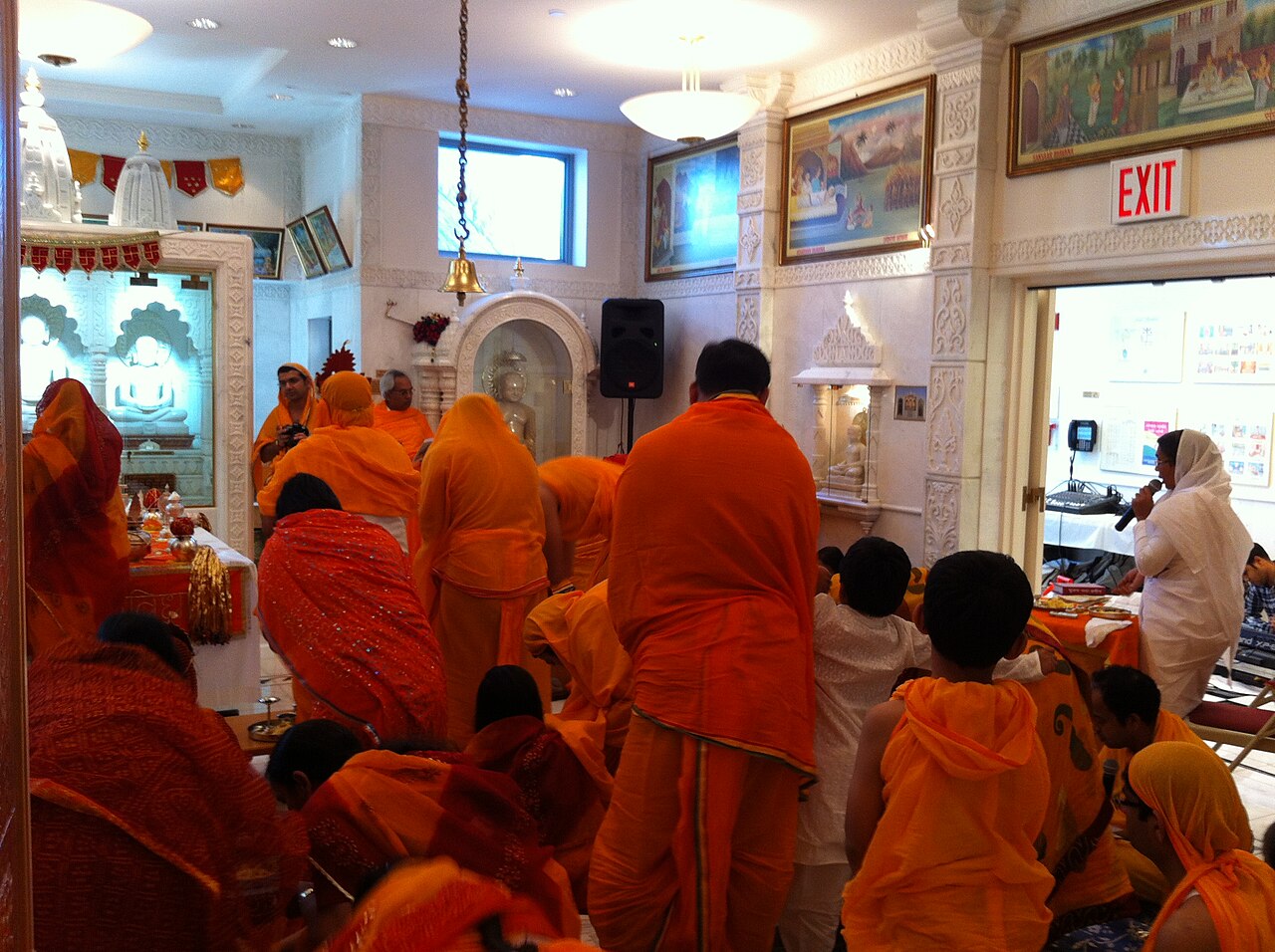
What Paryushana and Das Lakshana involve, monsoon roots, the Kalpa Sutra, ten virtues, fasting, and the yearly practice of asking forgiveness.
A period of intensification
Paryushana is among the most important periods in the Jain calendar. Falling during the rainy season, usually August or September, in the lunar month of Bhadrapada, it invites intensified scripture study, fasting, restraint, and introspection. Exact dates, lengths, and names vary between communities, but the underlying logic is shared: once a year, the whole community audits its conduct.
Why the monsoon matters
The timing is not arbitrary. During the four-month monsoon retreat (chaturmasa), Jain monks and nuns suspend their wandering life and settle in one place, because travel on rain-soaked ground teeming with insects and new growth would violate the vow of non-harm. A settled monastic community means months of daily access to teachers, and Paryushana grew out of that opportunity. The festival’s name is often glossed as “abiding” or “coming together.” The season thus ties the calendar directly to ahimsa: the community reflects most intensely at precisely the time of year when life is most abundant underfoot.
Eight days, ten days
The two major Jain traditions keep the season differently, and knowing which observance you are seeing avoids confusion.
Svetambara Jains observe Paryushana proper for eight days. In temples and halls, monks recite the Kalpa Sutra, the scripture attributed to Bhadrabahu containing the lives of the Tirthankaras; on the fifth day the account of Mahavira’s birth is read, and replicas of the fourteen auspicious dreams of his mother, Queen Trishala, are displayed and honored. The festival culminates in Samvatsari, the “annual day”, observed on the fourth or fifth day of the bright half of Bhadrapada, depending on the community’s reckoning, when Jains perform the year’s most solemn rite of repentance.
Digambara Jains begin their ten-day festival, Das Lakshana Parva, immediately afterward. Rather than reading Tirthankara biographies, each day is devoted to one of the ten supreme virtues enumerated in the Tattvartha Sutra (9.6): forbearance, modesty, straightforwardness, purity, truthfulness, self-restraint, austerity, renunciation, non-possessiveness, and chastity. Passages from the Tattvartha Sutra itself are commonly recited through the festival. The season closes with Kshamavani, the day of forgiveness, on the first day of the dark half of Ashvin.
The doubled calendar is one of the clearest windows into how the Digambara and Svetambara traditions differ in texture while agreeing in substance: different books, different day-counts, identical culminating act.
Where the dates come from
The season’s timing is anchored in monastic law rather than commemorating an event. The Kalpa Sutra’s section of rules for ascetics directs that monks and nuns should commence Paryushana when a month and twenty nights of the rainy season have passed, which is why Samvatsari is traditionally described as falling around the fiftieth day of the four-month retreat. The festival, in other words, began as the fixed point by which wandering ascetics had to be settled for the rains; the lay observances of fasting, study, and confession accreted around that monastic deadline over the centuries.
Within the Digambara ten days, particular dates carry their own observances: on the tenth day of the bright fortnight many households keep sugandha-dashami, offering fragrant incense in temples, and the fourteenth, Ananta Chaturdashi, is marked with special worship and, in many towns, a public procession. Because all of these dates ride on the lunar calendar, the Gregorian dates drift year to year, one reason diaspora Jains consult community calendars rather than fixed civil dates.
Forgiveness as practice
That culminating act is asking forgiveness. On Samvatsari, Svetambara Jains perform the samvatsari pratikramana, an extended liturgy of confession in which the practitioner reviews the year’s conduct category by category, harm done to one-sensed beings and five-sensed beings, lapses in each vow, negligence in each duty. Pratikramana (“turning back”) is performed by observant Jains daily or fortnightly; the annual version is its great audit.
Then comes the social half. Jains approach family, friends, colleagues, and estranged acquaintances with the Prakrit phrase micchami dukkadam. “may my improper actions be without consequence”, asking pardon for offenses given knowingly or unknowingly, in thought, word, or deed. A traditional verse recited at the season’s close widens the circle to every living thing: “I forgive all beings; may all beings forgive me. I have friendship toward all, enmity toward none.” This is not theatrical guilt; it is scheduled social repair. The tradition assumes that a year of ordinary life accumulates ordinary damage, and it refuses to let that damage compound silently.
Fasting and restraint
Fasting gives the season its physical texture. Practices scale from taking boiled water only, to eating one meal a day, to complete fasts of one, three, or eight days; a few practitioners undertake month-long fasts, and those completing major austerities are honored publicly at the festival’s end. Children and the elderly participate through smaller renunciations, giving up a favorite food, television, or harsh speech for the duration. The point is not athletic suffering but loosening the grip of appetite so that attention can turn inward.
The season’s seriousness registers in civic life too: during Paryushana, several Indian state governments temporarily close municipal slaughterhouses in deference to Jain observance, a measure repeatedly contested and litigated, but indicative of the festival’s public weight.
Study and listening
Lectures, readings, and temple gatherings multiply through the season. Many communities organize daily discourses working through a scripture, and diaspora congregations, often lacking resident monastics, since traditional monastic vows preclude air travel, stream lectures, invite visiting scholars, or have trained laypeople lead the Kalpa Sutra reading. For families abroad, Paryushana often functions the way major holy days do in many traditions: the annual occasion when practice, language, and identity are handed to the next generation in concentrated form.
The season treats knowledge as ethical fuel: understanding the path should change how one walks through markets, homes, and arguments. Study that produces no change in conduct is, by Paryushana’s logic, incomplete.
For non-Jain readers
Witnessing Paryushana can teach the value of a scheduled moral inventory. Many cultures keep confession or atonement seasons. Yom Kippur and Lent are familiar parallels, but Jain practice offers a particularly clear link between non-harm and interpersonal humility: the same tradition that sweeps the ground to spare insects also sweeps the year’s relationships for unacknowledged injury. One need not adopt Jain cosmology to borrow the discipline. Pick a date. Review the year honestly. Ask the people you have rubbed against, knowingly or unknowingly, to release it. The Jain calendar’s quiet wager is that a community which does this annually, without exception, stays repairable.