
Scripture Library
Reading the Dhammapada: A Beginner's Guide to Buddhism's Most Loved Text
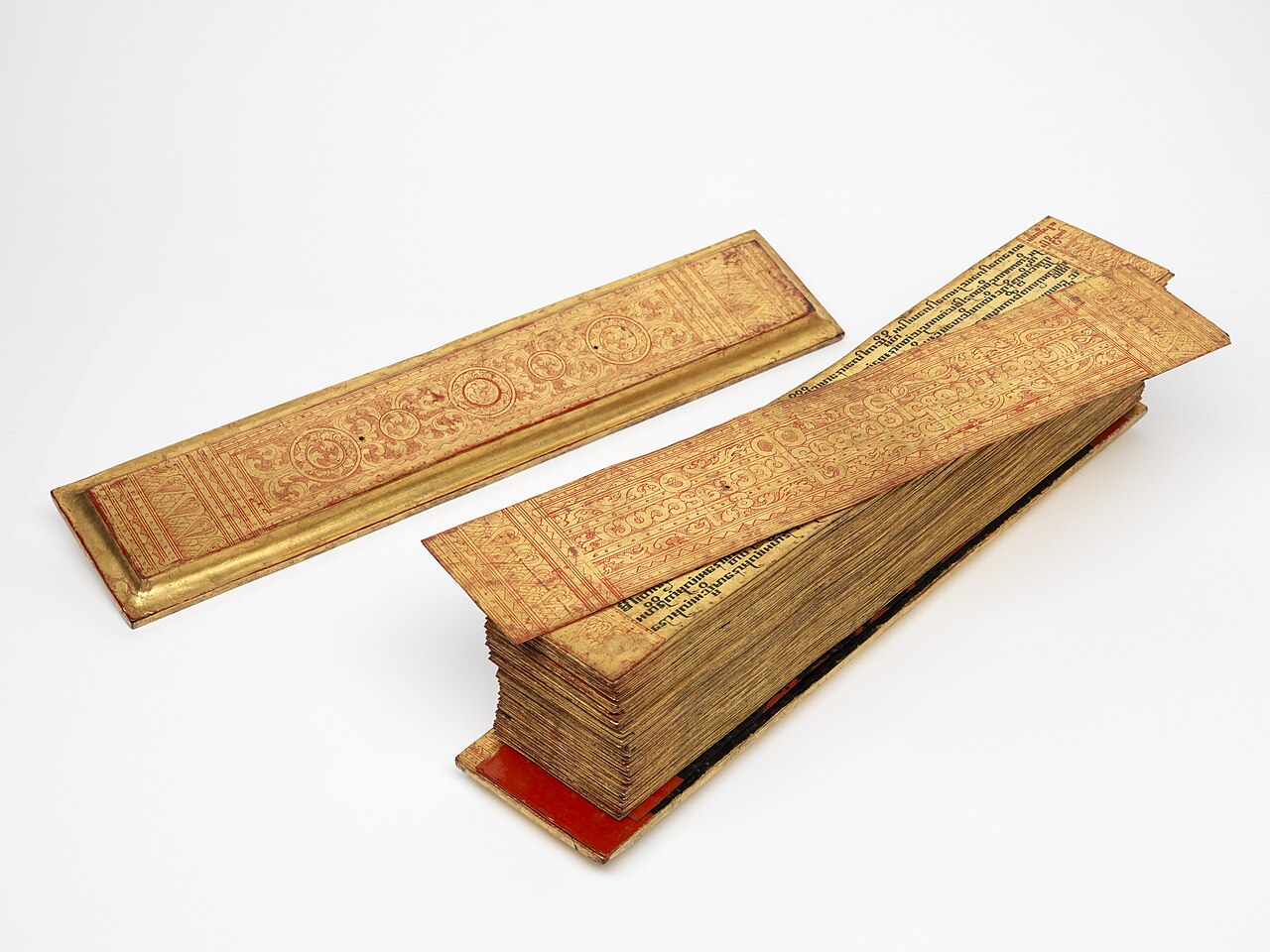
A reader's guide to the Dhammapada, 423 verses in 26 chapters, its famous opening lines, which English translation to choose, how to read it slowly, and how to spot the fake Buddha quotes that circulate in its name.
The pocket-sized classic
If a curious reader asks for one Buddhist text to start with, the answer across centuries and continents has usually been the same: the Dhammapada. It is short, 423 verses arranged in 26 thematic chapters , and it is old, belonging to the earliest stratum of Buddhist literature. In the Pali canon it sits in the Khuddaka Nikaya, the “collection of little texts” within the Sutta Pitaka, alongside works like the Sutta Nipata and the Udana. The title is usually rendered “verses of the Dhamma” or “the path of the Dhamma”. pada means both “word” and “foot(step),” and translators have enjoyed the pun for over a century.
The Pali Dhammapada is not the only one. Ancient Buddhist schools compiled their own verse anthologies from a shared pool: a Gandhari Dharmapada survives from the northwest of the subcontinent, a “Patna Dharmapada” in a related dialect, and an expanded Sanskrit cousin, the Udanavarga, circulated widely in Central Asia and Tibet. That family of parallel texts tells you something useful before you read a word: these verses were the portable, memorizable core of the teaching, the part communities carried when they could not carry everything.
The famous opening
The collection begins with the Yamaka Vagga, the “chapter of twin verses,” where teachings come in mirrored pairs. The first pair (Dhammapada 1–2) is among the most quoted passages in world religious literature. In Pali the first verse begins manopubbangama dhamma. “mind precedes all mental states.” Acharya Buddharakkhita renders the pair:
Mind precedes all mental states. Mind is their chief; they are all mind-wrought. If with an impure mind a person speaks or acts, suffering follows him like the wheel that follows the foot of the ox.
Mind precedes all mental states. Mind is their chief; they are all mind-wrought. If with a pure mind a person speaks or acts, happiness follows him like his never-departing shadow.
Everything characteristic of the book is already here: the parallel structure, the vivid agrarian image, and the insistence that ethical quality begins upstream of action, in the mind, the same diagnosis the Four Noble Truths make at full length.
Verses you may already know
A few landmarks, with citations you can check in any translation:
- Dhammapada 5: “Hatred is never appeased by hatred in this world. By non-hatred alone is hatred appeased. This is a law eternal.” (Buddharakkhita). Often invoked in reconciliation contexts across the Buddhist world.
- Dhammapada 103: Though one might conquer a thousand men a thousand times in battle, the noblest victor is the one who conquers himself.
- Dhammapada 160: Atta hi attano natho: “oneself, indeed, is one’s own protector”; the classic statement of self-reliance in practice.
- Dhammapada 183: “To avoid all evil, to cultivate good, and to cleanse one’s mind, this is the teaching of the Buddhas.” Traditionally treated as a one-verse summary of the entire path.
- Dhammapada 276: “You yourselves must strive; the Buddhas only point the way.” A bracing corrective to any hope that reading about the eightfold path substitutes for walking it.
- Dhammapada 277–279: the three marks, all conditioned things are impermanent, all conditioned things are unsatisfactory, all things are not-self , each verse ending: “when one sees this with wisdom, one turns away from suffering.”
Chapter titles signal the book’s range: Heedfulness (2), Mind (3), Flowers (4), The Fool (5), The Wise (6), the Buddha (14), Craving (24), and finally The Bhikkhu (25) and The Brahmana (26), that last chapter redefining the highest religious title of the Buddha’s culture in purely ethical terms.
The stories behind the verses
Tradition never read these verses bare. The Dhammapada-atthakatha, the great commentary attributed to Buddhaghosa (fifth century CE), supplies a background story for the occasion of each verse, around three hundred narratives in all, featuring kings, merchants, murderers, grieving mothers, and quarrelsome monks. Some of Buddhism’s most beloved tales live here, including Kisagotami and the mustard seed, told to frame the verses on death. Whether or not the stories are historical, they show how the tradition used the text: not as a quote-book but as case law, each verse indexed to a human situation.
Choosing a translation
More than a hundred English versions exist. Three are worth knowing about, each serving a different reader:
F. Max Müller (1881). The pioneering scholarly translation, published in volume X of the Sacred Books of the East. It is public domain, free everywhere, and historically important, but its Victorian diction (“let a man..”) and dated scholarship make it a rough first encounter. Use it as a free second witness, not a primary text.
Acharya Buddharakkhita, The Buddha’s Path of Wisdom (Buddhist Publication Society, 1985). A translation by a practicing monk, first drafted in the 1950s and published with a substantial introduction by Bhikkhu Bodhi. Faithful, plain, and crucially , available free online at Access to Insight with the BPS’s blessing. This is the best no-cost starting point.
Gil Fronsdal (Shambhala, 2005). A fresh translation by an Insight Meditation teacher with a Stanford doctorate in Buddhist studies, informed by K. R. Norman’s philological work, with a foreword by Jack Kornfield and generous annotations. Its contemporary, inclusive English makes it the current default recommendation for a print copy. Readers who want the full scholarly apparatus can go one step further to Norman’s own The Word of the Doctrine (Pali Text Society, 1997).
A practical tip: read two translations side by side. Where they diverge, something interesting is happening in the Pali, and the comparison teaches you more than either version alone, a habit we recommend for any scripture, as discussed in how to read scripture.
How to read it slowly
The Dhammapada rewards a pace that feels almost wastefully slow. A workable method: one chapter per sitting, or even one verse per day, there are 423, comfortably more than a year’s supply. Read the verse twice, once silently and once aloud. Copy it by hand into a notebook; the tradition transmitted these lines by memory for generations, and writing re-creates a little of that slowness. Then carry the verse into the day and watch for the situation it names , the verses on anger, for instance, tend to find their occasion within hours. Memorizing even five verses gives you something no summary can: the text available at the moment you need it, which is rarely a moment when you are holding the book.
Fake Buddha quotes
A warning that has become unavoidable in the social-media era: a large share of quotations attributed to the Buddha online are not from the Dhammapada or any Buddhist text. The Buddhist teacher Bodhipaksa has catalogued hundreds at fakebuddhaquotes.com and in his book I Can’t Believe It’s Not Buddha! (Parallax Press, 2018). Some are garbled paraphrases. “The mind is everything; what you think you become” is a loose Victorian-flavored mutation of Dhammapada 1–2 that flattens its careful ethical claim into positive thinking. Others are wholesale inventions with no source at all, often suspiciously modern in their concerns (“you yourself deserve your love and affection” has no canonical basis). The reliable defense is the habit this whole guide recommends: insist on a citation , chapter and verse, and check it against a real translation. The genuine text is more interesting than the memes, and it is freely available; there is no need to settle for counterfeits.
Why this text endures
The Dhammapada has survived twenty-three centuries, multiple languages, and the internet because it does one thing supremely well: it compresses a demanding path into lines a person can hold in memory and test in a day. It contains no philosophy requiring prerequisites, no ritual requiring a temple, only the repeated, patient claim that mind shapes life, that hatred has never once worked, and that no one else can walk the path for you. Read it slowly, cite it accurately, and let it argue with you.