
Hinduism
One God or Many? How Hindus Understand the Divine
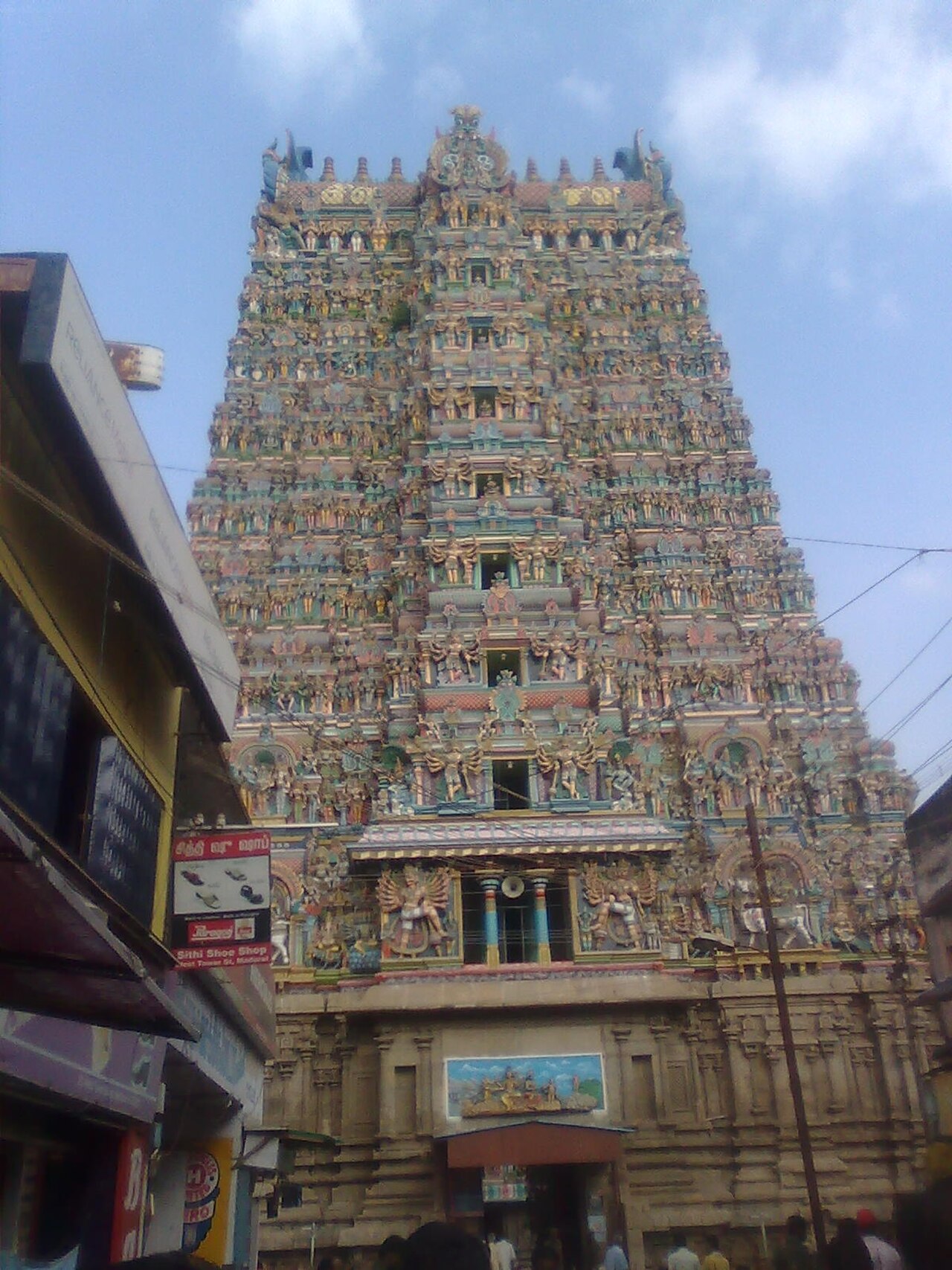
From the Rig Veda's 'Truth is One' to temple worship of many forms, how Hindu traditions hold unity and multiplicity through Brahman, saguna and nirguna, ishta devata, and the major devotional paths.
Visitors to a Hindu temple often count gods faster than they can name them. Ganesha near the door, Shiva in one shrine, Devi in another, Hanuman in a corner niche. A friend may say, “We worship one God in many forms.” A philosophy book may say, “Hinduism is polytheistic.” Both statements circulate in the same community. Neither captures the whole picture alone.
Hindu traditions hold multiple truths about the divine at once: a formless absolute (Brahman), a personal Lord (Ishvara), a pantheon of deities (devas and devis), and the family deity (ishta devata) who receives daily puja. The question is not which account is “really” Hindu. The question is how practitioners move between them without contradiction.
“Truth is One; the wise call it by many names”
The Rig Veda, Hinduism’s oldest scripture collection, contains a verse often quoted in interfaith dialogue: Ekam sat vipra bahudha vadanti, “Truth is One; the wise express it in many ways” (Rig Veda 1.164.46, trans. Wendy Doniger). The line sits in a hymn that uses riddles about a divine tree, sacrificial fire, and hidden speech. Scholars debate its original ritual context, but centuries of later readers took it as a charter for theological pluralism within the tradition itself.
The verse does not deny multiplicity. It redefines it. Many names and forms point toward one reality too large for a single image or formula. That insight runs through Hindu history in different accents: Vedantic philosophers speak of Brahman beyond attributes; bhakti poets sing to Krishna, Rama, or the goddess as supreme beloved; village priests tend shrines to local goddesses whose names never appear in Sanskrit epics.
Brahman: the ground beyond form
Philosophical Hinduism, especially the Advaita Vedanta school associated with Shankara (eighth century CE), distinguishes between the everyday world of names and forms and Brahman, the ultimate reality that underlies everything. Shankara’s commentary on the Brahma Sutra opens by affirming that Brahman is the source of scripture and the object of spiritual inquiry (Brahma Sutra Bhashya 1.1.1).
In this view, the gods of the temple are real within the world of appearance (maya), but Brahman alone is ultimately real (sat). Liberation (moksha) comes through recognizing one’s self (atman) as not separate from Brahman. Bhakti theologians push back: the personal God is not less real than the formless absolute. Both can be ultimate depending on the path.
Saguna and nirguna: with qualities and without
Theological vocabulary sharpens the distinction between God with attributes (saguna) and God without attributes (nirguna). Saguna Brahman is the Lord who can be named, pictured, and addressed in prayer: Vishnu with conch and discus, Shiva with the third eye, Devi riding a lion. Nirguna Brahman is the absolute beyond every quality, including gender, color, and story.
Many Hindu thinkers treat the two not as rivals but as levels of the same reality. The formless is harder to love directly; the formed gives devotion a face. Ordinary householders rarely argue the metaphysics. They light a lamp before a framed image and, on quieter days, repeat a mantra that names what cannot be drawn.
Our introduction to the Upanishads shows where the nirguna strand enters philosophical discussion. Puja at home shows saguna worship in daily practice: the same family may speak of formless Brahman in a philosophy class and offer flowers to Ganesha before breakfast.
Ishvara and the major devotional paths
Most practicing Hindus relate to divinity personally through one of the great devotional traditions. Vaishnavas center worship on Vishnu and his avatars, especially Krishna and Rama. Shaivas honor Shiva as supreme, often through the linga and through pilgrimage to shrines like those celebrated on Mahashivratri. Shaktas revere the Goddess (Devi, Shakti) in forms from gentle Lakshmi to fierce Kali, with Navaratri as a major season of her praise.
Smartas follow a fifth pattern, common among many South Indian Brahmins and others: worship of five deities (Ganesha, Shiva, Shakti, Vishnu, and Surya) as facets of one reality, without declaring any single one supreme for all people. A Smarta home may rotate festival emphasis while keeping a single philosophical stance of non-exclusivity.
Each path has texts and arguments for why its chosen deity is supreme, while often acknowledging other forms as valid manifestations. The Bhagavad Gita voices Vaishnava devotion through Krishna, who tells Arjuna that he is the supreme Lord in whom all worlds rest (7.7), and that whatever glorious or powerful exists is a spark of his splendor (10.41). Shaiva and Shakta scriptures make parallel claims for Shiva and Devi. Gavin Flood summarizes the landscape: Hindu theology is less a single doctrine than a family of doctrines sharing vocabulary.
Devas and the ishta devata
The Sanskrit word deva means “shining one.” In Vedic hymns, devas are Indra, Agni, Varuna, and dozens more, powers tied to rain, fire, cosmic order. Later Hinduism retains many as permanent figures in myth and temple: Saraswati for learning, Lakshmi for prosperity, Hanuman for strength and service.
At the household level, theology becomes personal through the ishta devata, the chosen deity of the family or individual. Home altars often center on one figure while acknowledging others on festival days. A Tamil family may worship Murugan daily and Lakshmi on Diwali; a Bengali household may center on Kali while reciting Vishnu sahasranama. Bhakti traditions say love selects its object; philosophy later explains how that object connects to the whole.
Murti worship: presence in form
The consecrated image (murti) is not treated as a statue of God in the way a museum bronze represents a historical figure. After ritual installation (prana pratishtha, “establishing breath”), the image is understood to be a living seat of the divine, worthy of the full sequence of hospitality offered to an honored guest. Diana Eck’s study of darshan, the mutual “seeing” between devotee and deity, applies as much to a temple sanctum as to a brass Ganesha on a shelf.
That logic explains why shoes come off at the door and why offerings of food are later returned as prasad, blessed and shared. Our temple etiquette guide walks through how those gestures work in public worship.
Living with many answers
Philosophical unity (one truth, one ground) coexists with devotional multiplicity (many beloved forms) and ritual specificity (this god, here, now). Neighboring traditions sharpen the contrast: Sikh scripture opens with Ik Onkar, while Hindu practice centers on murti and manifold names. A student may learn that Brahman is beyond speech while still bowing before Ganesha before exams. A pilgrim may trek to a remote shrine convinced that this mountain goddess is supreme, without issuing a decree about other mountains.
Hindu understandings of God are not a failed attempt at monotheism, nor a chaotic pile of unrelated idols. They are a deliberate capacity to hold unity at the center and diversity at the edges: one reality expressed in many forms, approached through the name and face that reach your heart, while dharma keeps the worship grounded in ethical life. The question “one or many?” receives its Hindu answer in a single breath: yes.