
Jainism
Why Jains Eat the Way They Do
How ahimsa shapes Jain diet from root vegetables and sunset meals to fasting and diaspora adaptations, and why food ethics sit at the center of daily practice.
Ask a Jain friend why they skipped the onion in yesterday’s salad, or why dinner happened before sunset, and you may get a short answer: “It’s our religion.” The longer answer is one of the most detailed food ethics in any living tradition. Jain meals are not a health fad or a cultural quirk. They are ahimsa, non-harm, translated into what is bought, chopped, cooked, chewed, and refused.
If you have read our overview of Jain ahimsa or the five great vows, you know the principle at the center. Food is where that principle meets the market, the kitchen, and the body every single day.
Ahimsa at the table
Jain tradition defines harm (himsa) with unusual precision. The Tattvartha Sutra states that injury is the severance of vitalities through careless activity (Tattvartha Sutra 7.13). Beings are ranked by how many pranas, life-functions, they possess. Humans and animals with five senses count heavily; plants count too, though differently. Eating is never innocent in an absolute sense. It is always a trade-off, minimized by choice of ingredients, preparation, and restraint.
The Acaranga Sutra, among the oldest Jain scriptures, forbids killing or tormenting breathing creatures without qualification (Acaranga Sutra 1.4.1, trans. Hermann Jacobi). Monks and nuns extend that logic to rigorous rules: no root vegetables, no eating after dark, no honey, no alcohol. Lay Jains follow scaled versions of the same code, called anuvratas, partial vows described in the Tattvartha Sutra’s seventh chapter. Your colleague who avoids meat but eats potatoes is not breaking Jain logic; they are on a different calibration of the same path.
Why root vegetables are avoided
Among the rules that surprise outsiders most is the avoidance of root vegetables: potatoes, onions, garlic, carrots, beetroot, and similar foods that grow underground. The reason is not taste or ancient medicine. Underground parts harbor more microscopic life; uprooting the plant kills it entirely rather than harvesting fruit or leaves that leave the plant alive.
Onions and garlic receive extra suspicion in many communities because their strong flavor is linked, in traditional commentaries, to stimulation and aggression. Not every Jain household agrees on the full list. Some diaspora families eat potatoes but not onions; others avoid both. Digambara and Shvetambara communities differ in strictness on minor items. The shared logic remains: choose foods that destroy fewer lives and require less violent extraction.
Green vegetables, lentils, grains, milk, and fruit occupy the center of the Jain plate when dairy is accepted. Fruit is especially favored because it can be taken without killing the tree. Peanuts and beans are debated; regional custom often decides.
Ratri bhojan: no eating after sunset
Ratri bhojan, eating at night, is prohibited for observant Jains. The rule is practical as much as symbolic. Before electric light, cooking and eating after dark meant insects drawn to flame and water fell into food unseen. Today the habit persists as ratri bhojan virati, abstention from night meals, often defined as eating only between sunrise and sunset, sometimes with a final snack before full dark.
Families adjust clocks for latitude. In London or New Jersey, winter sunsets come early; summer stretches the eating window. Temple communities may set a fixed hour, say 6:30 p.m., for communal consistency. During Paryushana, the annual season of intensified practice, even stricter fasting layers onto the daily schedule.
The rule shapes social life. A Jain teenager may leave a school dance early not from disdain but to finish dinner in time. Business dinners in India sometimes schedule around Jain colleagues. In diaspora, negotiation replaces assumption: hosts learn to serve lunch buffets for festival days, or to label ingredients when dinner must run late.
Fasting as spiritual arithmetic
Jain calendars include many fasts, from skipping one meal to going without food or water for days. Upvas means staying near the soul by standing apart from food. Ekasana limits the day to one sitting; beasana to two. Longer fasts, sometimes thirty or more days under medical supervision, mark major life vows or festival peaks.
Fasting is not punishment. It is attention training: to feel hunger without becoming cruel, to notice how often the mind reaches for comfort. Paul Dundas notes that lay fasting intensifies during Paryushana and on certain lunar days. Monastic fasts can be austere to a degree laypeople do not attempt. The Tattvartha Sutra introduction in our library explains how monastic and lay paths share one ethical map at different scales.
Children and elders are exempt when health requires food. Jain ethics insist that harming one’s body is also himsa against the life within.
Water, honey, and alcohol
Water must be boiled, filtered, or left to stand so living organisms settle, in strict households. Unfiltered tap water is avoided by those keeping full dietary code. Honey is excluded because it is considered stolen from bees. Alcohol is rejected as clouding judgment, the pramatta state that the Tattvartha Sutra ties directly to careless injury.
These rules rarely appear in restaurant menus. They appear in home kitchens, where grandmothers teach grandchildren to inspect lentils for stones and to wash greens leaf by leaf.
Diaspora adaptations
Migration compresses tradition against new grocery aisles. A Jain family in Toronto may eat quinoa and soy milk while skipping onion-garlic masala bases sold in jars. Temple societies publish ingredient guides for festival potlucks. Restaurants in Mumbai and Ahmedabad label “Jain pizza” (no root veg, no night cooking). In Silicon Valley, office cafeterias stock Jain-friendly options when enough employees request them.
John Cort’s fieldwork among Jains in Gujarat and diaspora notes that strictness often loosens across generations, then tightens again when young adults reconnect with temple education. Anekantavada, the Jain doctrine of many-sided truth, helps communities tolerate internal diversity: two families, two calibrations, one festival hall.
Comparison helps outsiders without flattening difference. Hindu vegetarians may avoid beef; Buddhists may eat onion; Sikhs serve lacto-vegetarian langar with garlic and ginger. Jain diet is narrower because its logic is narrower: minimize violence to the smallest visible and invisible lives. Our cross-tradition piece on ahimsa situates Jain food ethics beside Hindu and Buddhist non-harm without claiming they are identical.
Eating as daily vow
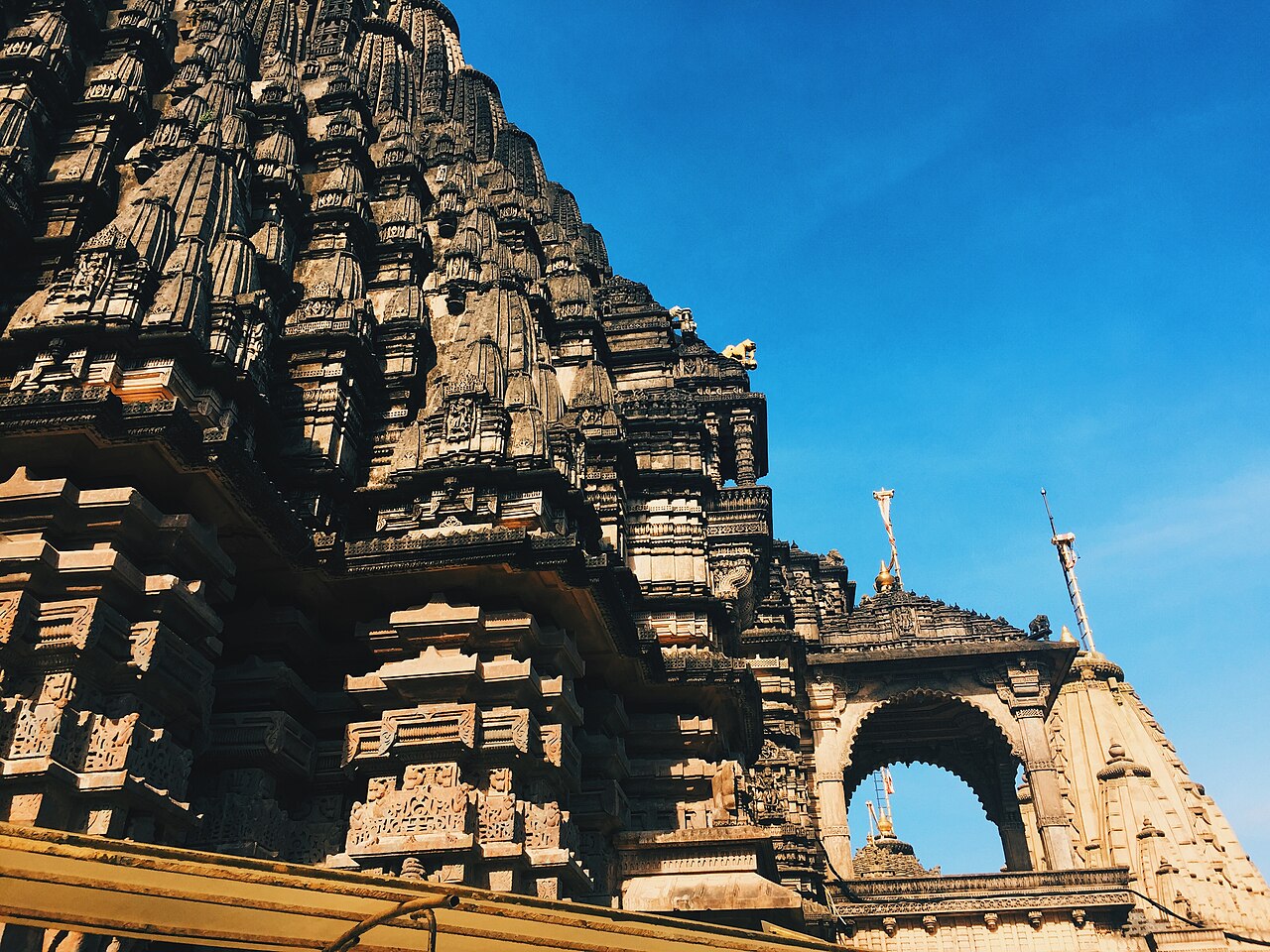
Jain food rules can look like a list of prohibitions. From inside the tradition they read as a positive vocation: to eat in a way that keeps the conscience quiet, to share meals that do not require hidden killing, to fast when the calendar asks for sharper awareness. The temples on Palitana’s hill, visible in pilgrimage photos from Gujarat, rise above a landscape where merchants have negotiated these choices for centuries.
You do not need to adopt every rule to learn from them. Notice how a tradition can tie metaphysics to lunch. Notice how sunset can mark a moral boundary. Notice how a community feeds its guests during Paryushana while refusing ingredients most neighbors consider harmless. Jain eating is not separate from Jain believing. It is believing carried in the hand that lifts the spoon.